Saturday, December 12, 2009

postman heijiro & thoughts on the use/abuse of role models


The story of Kira Heijiro, or "Postman Heijiro" as he is better known, is no folktale. He was a real live Ainu, born in eastern Hokkaido on February 3, 1886. The Ainu name of his father was Nusashibe; his mother was Matsutsuru. But they were dead by the time he was 6, and after that he was raised by an aunt. At age 15, he came down with an unexplained fever which left him partially paralyzed on one side.

Due to the government's prohibition of most of the traditional Ainu means of livelihood- a strategy intended to assimilate the Ainu into mainstream Japanese society- these were hard times for any Ainu to find work. But Heijiro was now Ainu, impoverished, and disabled. When he could get work, Heijiro worked long and hard to make up for his physical handicap, gaining a reputation as honest and reliable. In January 1922, at age 35, he was hired to carry the out-going mail from the rural post office to the main branch in Kushiro, picking up the in-coming mail at Kushiro for delivery to the villages. The exchange had to be done during the night, and involved a solitary 16 kilometer trip (on foot, or by horse if one could be procured) through the deep-forested mountains where it was not unusual to encounter bandits. Safe delivery of the mail was regarded as a task of the highest importance, and Heijiro was instructed to take the task very seriously.

On the third day of his new job, Heijiro was caught in a fierce blizzard and the going became increasingly hopeless. One of his canvas shoes became torn and fell away, so he tied a towel around his foot, but was unable to make significant headway. Finally, he removed the heavy mail bag from his back, wrapped it in his cape, secured it with a rope, tied a towel to his bamboo walking stick, and fastened that to the mail bag as a marker. Leaving the mail bag as water-proofed and secure as he could make it, he renewed his efforts to find shelter for himself. Days after Heijiro went missing, a search team found the mail bag. Then they found Heijiro's body. Apparently, he had fallen into a deep pocket of snow, and had been unable to free himself for lack of the full use of his limbs.

This is where it really gets interesting. The news of the incident was reported all over the nation through print media such as the Jijishinpou (a daily newspaper created by Fukuzawa Yukichi in 1882), praising Heijiro's actions as "...truly faithful to his duty, he quietly closed his eyes to receive death only after securing the stick as a marker...," and that his death in the line of duty "was a model of a strong sense of responsibility." Many letters and money gifts poured in from all over the country to celebrate what they saw as "a manifestation of the Japanese spirit (Yamato damashii) and a preparedness for death equal to that of the samurai." Furthermore, in 1933, the Ministry of Education included the Heijiro incident in an Ethics textbook under the title "Responsibility." The fact that Heijiro was Ainu was conveniently omitted, and in fact, not widely known until very recently.

In 2005, a group of Kushiro citizens established the Kira Heijiro Kenkyuukai (Kira Heijiro Study Group) with the twofold purpose of (1) collecting and documenting accurate information about Heijiro's life and death and (2) producing a stage play to publicize as widely as possible the results of their research.

I first became aware of Heijiro earlier this summer, when his name came up during a discussion with a colleague in indigenous studies research. She kindly arranged for me to get a DVD copy of the aforementioned stage performance. The liberal use of flashbacks, without much in the way of the visual clues provided more easily by motion pictures than by stage performances, was a little distracting. And, at first, I was slightly irritated by what I thought was unnecessarily repetitive references to the Ainu view of the sanctity of life. But a little on-line research explained the need for this persistence very quickly.

Exactly what was it that bothered the Ainu community about the way the Heijiro incident was interpreted by mainstream Japanese society? The Japanese media and government had turned Heijiro into a symbol of the "diminish the self in the service of the state" (genshi-houkou) style of patriotism that was so prized at the time. But the Ainu view of the sanctity of life includes the sanctity of one's own life, and "death in the line of duty" is not an Ainu virtue. Thus, the play's insistence that "Heijiro, while taking responsible action for the safekeeping of the mail, never once gave up trying to preserve his own life." The Kushiro study group has thoroughly researched the police reports and interview records, documenting facts that would seem to support this claim, including the fact that Heijiro's body was found 100 meters away from the secured mail bag, and the fact that he was frozen in a standing position, facing the village.

Imagine the Ainu frustration at having one of their own people turned into a symbol of the so-called Japanese spirit, when it is so contrary to what they themselves value. Societies are always on the lookout for heroes and role-models, and will fabricate them if they can't be conveniently found in real life. Heijiro was, by all accounts, honest, hardworking, and responsible; not giving in to fatalism or self-pity because of his unfortunate life circumstances. He makes a good role-model for us all.

Wednesday, December 2, 2009

ando umeko and the ainu lullaby


If you have been following this blog, you know that our latest storybook translation, The Ainu and the Bear~the gift of the cycle of life, will be out very soon through RIC Publications. RIC includes a CD recording of the text with each storybook they publish, and this book is no exception. This is intended as an aid to second-language readers and young children, but in our case, it has the added benefit of enriching the experience of the text with authentic Ainu music.

The music on the CD which accompanies The Ainu and the Bear has been selected from Ando Umeko's critically acclaimed solo album Ihunke (produced by OKI's Chikar Studio in 2001). Ihunke means lullaby in the Ainu language. Ando Umeko, an Ainu from the Tokachi region of Hokkaido, was widely regarded as a master of the mukkuri (Ainu version of a Jew's harp) and upopo (Ainu chanting songs). She worked tirelessly to preserve and pass on traditional Ainu skills and customs for following generations of Ainu. She died of cancer in 2004 at the age of 72.

Experience Ando Umeko's voice on this YouTube segment. Her singing is accompanied by OKI's performance on the tonkori, a slim, 5-stringed instrument that was once popular among the Sakhalin Ainu, and which OKI helped to rescue from extinction.

Sunday, November 15, 2009

ainu wood carving (ikupasuy)


The most important article of spiritual and artistic carving was the ikupasuy or prayer stick, which assisted in taking the men's prayers to the land of the kamuy gods. They were carved from yew, willow, or spindle wood, and were usually twelve to sixteen inches long and two to four inches wide. They had rounded edges and were tapered at one end. The majority of these sticks were basically flat, but they were carved with multi-leveled relief designs that ranged from incredibly complex to quite simple.

The ikupasuy was one of the rare exceptions to the rule that the Ainu did not depict people or animals in their decorations for fear of angering the gods. Carvings on the prayer sticks included representations of bears, killer whales, seals, fish such as salmon and swordfish, birds such as albatross and ducks, snakes, and flowers; or objects made by human hands, such as boats. Markings at each end of the ikupasuy identified the carver's clan so that the gods would know who the prayer had come from. Hours of thought and energy went into making the prayer sticks, and if you ever find one for sale, chances are it is a replica carved by a non-Ainu, and thus not considered sacred by the Ainu.

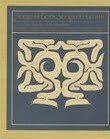
My favorite single photo of the ikupasuy carvings is the one on the cover of the book Ainu, Spirit of a Northern People published by the Smithsonian Institute, but there are some more awesome ones pictured inside the book. Find a copy if you can. (ref: Ainu, Spirit of a Northern People)

Wednesday, November 4, 2009

ainu wood carving (inaw)


Traditionally, the most important duty of an Ainu man was to carve the inaw. Inaw are the sacred shaved sticks that symbolize birds, and which were believed to deliver human prayers to the gods or chase away demons. Carving inaw involves stripping the outer bark from a tree limb (often willow or dogwood), then shaving the wood underneath so that it forms bunches of paper-thin curls attached at one end. This is time-consuming work and requires both a steady hand and a special carving tool called an inaw-kemakiri. The design and shape of the inaw depends on the particular god to which the prayers are being addressed, and the ceremony in which they are going to be used. Once used, they are never reused, but left where they have been placed until they fall into decay (or burned, if the inaw is for the fire god) after a single use. Inaw have a graceful, understated beauty that contrasts with other Ainu designs, which tend to be visually "busy" and stimulating. (ref: Ainu: Spirit of a Northern People and Sapporo Pirika Kotan museum)

Wednesday, October 28, 2009

ainu tradition of wood carving


As I have mentioned in previous posts about Ainu design, wood carving was, and still is, "men's work." Both of the storybooks I've translated, and many more of the yukar, have scenes involving the menfolk carving wood-- sometimes tools and arrows, but often items of spiritual significance such as the inaw (sacred shaved sticks) and ikupasuy (prayer sticks). The photo posted here was borrowed with permission from a site called Old Photos of Japan, which displays photos of Japan between the 1860s and the 1930s, and includes some rare scenes from Ainu life. This particular photo shows an Ainu man carving what appears to be a prayer stick. Click here to read the informative article that goes with the photo. More about the purposes and designs of wood carving in my next post.

Wednesday, October 21, 2009

the owl and the message


The Owl and the Message is my English version of the Song Sung by the Owl God~ Konkuwa from Chiri Yukie's yukar anthology. I translated and retold it in view of getting it published as a storybook for English-speaking children. The message to which my title refers, is a timely one for our day. In the story, the Ainu villagers are starving because the mountains and rivers no longer provide the food they need. The owl kamuy, who is the guardian of the village, sends a message to the land of the kamuy gods to find out why this situation has come about. He receives a reply with an explanation, a warning, and a chance for the village to redeem itself. I find it easy to imagine this yukar being chanted to generation after generation of young Ainu, as a lesson in both personal and group responsibility, the consequences of one's behavior, and how to co-exist with nature.

The Owl and the Message

When I was young my voice was strong. Now I am old and my voice has become weak. But I have an important message and I need someone I can count on to deliver it for me. So I called out, “Is there anyone who is good at speaking and can be trusted to deliver my message?”

A young crow came to my door and said, “No one is better at speaking than I am. You can count on me to deliver your message.” So I began to tell him the message as I beat on the lid of the wine cask, for my message was a long one. Three days passed and I was still only part way through the message. But I looked up and saw that the young crow had fallen asleep next to the hearth. I became very angry and beat the crow to death.

Once again I called out, “Is there anyone who is good at speaking and can be trusted to deliver my message?” A mountain jay came to my door and said, “No one is better at speaking than I am. You can count on me to deliver your message.” So I began to tell him the message as I beat on the lid of the wine cask, for my message was a long one. Four days passed and I was still only part way through the message. But I looked up and saw that the mountain jay had fallen asleep next to the hearth. I became very very angry and beat the mountain jay to death.

Once again I called out, “Is there anyone who is good at speaking and can be trusted to deliver my message?” A young water ouzel came to my door and respectfully entered my house. I saw that he was well-dressed and had good manners. So I began to tell him the message as I beat on the lid of the wine cask, for my message was a long one.

After six days and nights I looked up and saw that the water ouzel was wide awake and still listening carefully to my words. As soon as I finished speaking, the water ouzel flew out of the house through the smoke hole in the roof and took my message up to heaven.

This was my message:

“There is a famine in the human world and the humans are starving. There is nothing to eat on land or in the water. When they hunt in the hills, there are no deer. When they go to the river, there are no fish. Is there a reason the gods will not provide for their needs?”

After several days passed, the water ouzel returned to my house with an answer from heaven. The water ouzel said, “Humans have been treating the deer and fish without respect, hitting them with rotten sticks and leaving parts abandoned in the forest. The spirits of the deer and fish return to heaven in a mess, and this has made the gods angry. But if humans improve their ways by showing respect to wildlife, and once again treat the deer and fish with honor, the gods will make sure they will have enough to eat.”

That night I went to the humans in their dreams and explained to them the reason for the famine. I then taught them how to treat the deer and fish with honor. The humans changed their ways from the very next day. They began to treat wildlife with respect. They used beautifully carved sticks for fishing and hunting, and they adorned the deer and fish after catching them, so that their spirits could return to heaven in honor.

The gods now provide the humans with enough to eat, and there is no fear that they will starve any more. The crisis is over and my spirit is free to leave this old body at last. I will now go to heaven, leaving the human world in the care of younger owl guardians.

The End

I'm not sure whether I should stick to the relatively formal language of the original yukar, or if I should revise it to sound more modern and informal. I also wonder how Western readers will react to what happens to the crow and the mountain jay. Will I have to soften the language? Or should I be true to the original? If you have any thoughts on these issues, I welcome comments. The attached illustration is the work of Stephanie Gagnepain.

Sunday, October 11, 2009

rimse: traditional ainu dance


This year, 2009, traditional Ainu dance was inscribed on the Representative List of the Intangible Cultural Heritage of Humanity. Here's a quote from the UNESCO site on intangible cultural heritage:

Traditional Ainu dance is ...closely connected to the lifestyle and religion of the Ainu. The traditional style involves a large circle of dancers, sometimes with onlookers who sing an accompaniment without musical instrumentation. Some dances imitate the calls and movements of animals or insects; others, like the sword and bow dances, are rituals; and still others are improvisational or purely entertainment. Believing that deities can be found in their surroundings, the Ainu frequently use dance to worship and give thanks for nature. Dance also plays a central role in formal ceremonies such as
Iyomante, in which participants send the deity embodied in a bear they have eaten back to heaven by mimicking the movements of a living bear. For the Ainu, dance reinforces their connection to the natural and religious world and provides a link to other Arctic cultures in Russia and North America.

For the rest of the article click here: UNESCO site. It also has slides and a video showing traditional Ainu dance. The video I've posted below is from YouTube. It's one of my absolutely favorite videos, and shows both the stunning dance of real red-crested cranes and the Ainu dance that derives from it. Enjoy!