Showing posts with label reference. Show all posts

Sunday, April 26, 2009

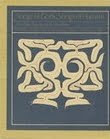
recommended reading: ainu, spirit of a northern people


This is an immensely valuable book suited to mature readers and serious students of Ainu culture and history. Permit me to take the easy way out and quote from the blurb on Amazon.com: "This book, which accompanied an exhibit at the Smithsonian's Arctic Studies Center, is the most in-depth treatise available on Ainu prehistory, material culture, and ethnohistory. The clearly written text is divided into six parts, each dealing with an aspect of Ainu culture and each authored or coauthored by noted authorities of Ainu prehistory and culture and benefiting from contributions by Ainu scholars themselves. Included are chapters on theories regarding Ainu origins prehistory; the early scholars of Ainu culture, such as Hiram Hiller and Jenichiro Oyabe; religion and cultural practices; and material culture. Perhaps most significant is the last part of the book,which addresses Ainu social and cultural issues, maintenance of traditional cultural practices, and the future of Ainu language." If you have the time to read it, and the resources to add it to your personal library, it is a must-have book. Otherwise, find a public or school library that has it, and refer to it for the background information that will enrich your enjoyment of Ainu folklore.

Saturday, April 25, 2009

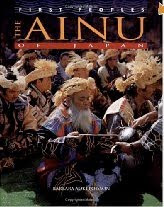
recommended reading: the ainu of japan


One of the things I struggle with when I translate an Ainu folktale, especially one targeted to young readers, is judging whether and how much to include explanatory notes. Such explanations can be woven into the text, or they can be in the form of footnotes, end notes, or appendices. Adding explanations has the potential of compromising the literary quality-- the magical flow-- of the story. But the whole point of Project U-e-peker is to make the world of Ainu culture and verbal expression accessible to the English-speaking world, and a certain amount of compromise must be accepted for the sake of accessibility. The folktales, charming enough on their own, become so much more meaningful with a little background information. A bit of preparatory reading can go a long way in helping a young person, or attending adult, to unlock their full significance. The Ainu of Japan, written for young readers by Barbara Aoki Poisson, fulfills this role perfectly. The writing is clear, accurate, engaging, comprehensive, and accompanied by illuminating photos. I recognize the value of this book all the more as I work on our most recent project, Iyomante: Meguru inochi no okurimono (see previous post), a storybook about the Ainu bear festival. The Ainu of Japan has several subsections that will surely clarify any confusion about the significance of the bear festival to the Ainu world view and way of life. I highly recommend it.