Thursday, May 6, 2010

the ainu and the bear (review by melissa kennedy)


The question of the extent to which we can truly accept the values of another culture is one of the most pressing and the most difficult in today’s age of multiculturalism. The Ainu Iomante, or bear-sending ceremony, which is often described as cruel and barbaric, is one such topic of contention. Even though we might consider ourselves liberal-minded and accepting of cultural differences, it is difficult to remain open-minded when we are confronted with an activity that, on a personal level, we find objectionable.

Of course, the easiest option is not to think about whatever we find offensive, and this was the easy road taken by the Japanese government in prohibiting the Iomante for fifty years. It takes much more courage, however, to confront our prejudices and fears. This is the difficult road recently taken by many indigenous cultures. Silenced for many years by virtue of their minority status and negative feelings of cultural self-worth, indigenous peoples have recently become confident to tell their stories. Their willingness to engage with the mainstream, which requires a reciprocal effort of understanding from the general public, engenders recognition and respect for the subaltern.

Whether or not one can accept cultural practices such as the Iomante comes down to personal choice, but understanding the context of that practice is certainly important. The Ainu and the Bear: The Gift of the Cycle of Life aims to educate a wider public about the Iomante. Both the book’s author and translator acknowledge the difficulty of such a task, and accept the risk of offending readers. Author, Ryo Michico, identifies the book’s key issue as an attempt to understand the context of the Iomante from an Ainu perspective, rather than interpret the event by our own values: “I can only hope that this picture book will play a small part in helping people understand not only Ainu culture, but also any culture that differs from their own.”


Repositioning the context of the Iomante does not take away the debate over the animal cruelty involved, but it does create a space in which dialogue is possible. As a scholar of indigenous minorities, as a teacher and as a wanna-be open-minded person, it is my hope that this book stimulates conversation, opinion and debate rather than the laissez-faire apathy towards Ainu that, to my mind, is the surest sign of disrespect.


Melissa Kennedy is an Assistant Professor at the Nagoya University of Commerce and Business, Faculty of Foreign Languages and Asian Studies, and co-edits the NUCB Journal of Literature. Her special fields of research include: Indigenous and minority cultures, Asia-Pacific cultural globalization, Maori literature, and Ainu cultural rejuvenation. She is currently working on a book of interviews with well-known Ainu artists, activists, politicians and educators who are both proud of their cultural heritage and committed to keeping it alive and thriving.

The Ainu and the Bear~The Gift of the Cycle of Life can be ordered from the RIC Publications website

Friday, April 2, 2010

the ainu and the bear (intro to the author)


I am pleased to announce that The Ainu and the Bear; the gift of the cycle of life (RIC Publications, 2010), our English translation of Iomante~ meguru inochi no okurimono (Parol-sha, 2005), will go on sale to the general public on April 15.

It has been tremendously exciting to be part of this project, and the chance to learn something about Ryo Michico, the author of the book, has been one of the things that made it so. Her wide-ranging interests include, but are not limited to, the cultures of original peoples. She was awarded the Mainichi Shinbun's New Writer's Award for Children's Literature in 1986. She translated Chief Seattle's speech Father Sky, Mother Earth into Japanese, and is the author of Aoi Namujiri (Blue Namujiru), a story based on a Mongolian folktale, as well as Ookami no ko ga hashittekite (literally: the wolf cub came running), which is based on an Ainu word-play game (both published by Parol-sha). In 2003, the International Astronomical Union (IAU) named an asteroid after her, in honor of Ms.Ryo's astronomy-related works (a whole different aspect of her career that I can't cover here).

Having assumed that indigenous peoples "lived in harmony with land and nature," Ryo Michico was shocked and puzzled by certain aspects of Ainu culture-- in particular, by the rite of Iomante, which is so central to their world view. As she moved among the Ainu, and listened to their stories and first-hand experiences, she gained a new understanding and appreciation for their way of seeing the world. Let me quote a brief passage from the postscript she wrote for The Ainu and the Bear:

Using the words "send off" rather than "kill" to refer to the Iomante is not subterfuge, but rather an expression of deep respect. The Ainu fully acknowledge that killing is involved. The village shares in the pain of the taking of life, and accepts with deep gratitude the gifts they receive at the cost of that life. This is what Iomante is all about... I can only hope that this picture book will play a small part in helping people understand not only Ainu culture, but also any culture that differs from their own. [p.66. my translation]

Click here to see Ms.Ryo's official website (in Japanese).

[note: the attached photo shows the cover of the version submitted to the Ainu Foundation, and may differ from the version which goes on sale to the general public.]

Tuesday, February 2, 2010

british museum video clip

This video clip from the British Museum provides a very brief commentary on the Iomante "bear sending" tradition of the Ainu. It is necessarily over-simplified, and the pronunciation of Ainu words is a bit off, but I think it's worth watching. I plan to post more commentaries and references to this subject from time to time. If you find something that may aid in understanding the issues in our discussion of the Iomante (or Iyomante) ritual, please leave a comment.

Monday, January 11, 2010

what does iomante mean for modern-day ainu?


Iomante (or Iyomante), the controversial "Bear-Sending Ceremony," which is so sensitively depicted in our most recent storybook translation (The Ainu and the Bear~the gift of the cycle of life; RIC Publications; 2010), is bound to upset some readers. We realize this, and sympathize. A newborn bear cub is torn from its mother (at the cost of the mother's life) and raised with tender care by a village, only to be killed in a ceremony that releases its spirit from the human world so it may return to the spirit world from which it came. The book does not advocate the practice. It simply explains how the custom fits into the traditional Ainu worldview, and attempts to show that within that worldview, the practice makes some sense, and is not meant to be a cruel one.

In 1955, Iomante was outlawed in Japan as barbaric, but the prohibition was rescinded in 2007. Does this mean the practice will be revived among the Ainu? Not likely. The ceremony has already been documented in detail on film for the historical records. The need for bear meat and bear skins in daily life is a thing of the past. Furthermore, the bear population of Hokkaido is declining at an alarming rate with the spread of urban areas.

So what does the right to practice Iomante mean to today's Ainu? I have been looking for hints of the answer to this question for some time now, and was intrigued by a recent news article about a sending ceremony conducted for the shimafukurou (Blakiston's fish owl). The shimafukurou is traditionally regarded by the Ainu as the guardian of the village. In some areas of Hokkaido it is the highest-ranked Ainu god, while in other areas the bear ranks higher. The sending ceremony for the owl is similar to that for the bear.

According to the news article, the dead body of a fledgling shimafukurou was found on a rural highway in the Hidaka area of Hokkaido on December 25, 2009. From the ID bracelet attached to its leg, it was identified as a juvenile that had been released into the wild just six months earlier by the Ministry of the Environment. The MOE is involved in breeding this endangered bird to circumvent its extinction. Even fledgling shimafukurou have wing spans that can exceed one meter (three feet), while the fully mature owls can be more than two-meters (six feet) from wingtip to wingtip.

The man who discovered the dead owl, the president of a construction company and member of the Hidaka branch of the Hokkaido Ainu Association, was reported as saying, "I knew at once it was no ordinary bird. There were the half-eaten remains of a duckling nearby. The owl must have brought its meal to the road to eat, and then gotten hit by a car." That same day, before returning the bird to the MOE, the Hidaka branch of the Ainu Association conducted a "sending ceremony" (Hopunire) to send the bird's spirit safely back to the spirit world. The subtle differences in meaning between Hopunire and Iomante seems to depend on the geographic origin of the speaker, but for the purposes of this blog post, the difference is insignificant.

I have also read that Iomante has been conducted in recent years for bears that die in captivity, such as those reared at the Kuma-bokujou bear park in Noboribetsu, one of the areas in Hokkaido where people of Ainu descent are concentrated. In these, and perhaps other ways, it appears that the tradition of Iomante is being preserved and carried on by modern-day Ainu.

See original news article about the sending ceremony for the dead owl (Japanese).

Saturday, December 12, 2009

postman heijiro & thoughts on the use/abuse of role models


The story of Kira Heijiro, or "Postman Heijiro" as he is better known, is no folktale. He was a real live Ainu, born in eastern Hokkaido on February 3, 1886. The Ainu name of his father was Nusashibe; his mother was Matsutsuru. But they were dead by the time he was 6, and after that he was raised by an aunt. At age 15, he came down with an unexplained fever which left him partially paralyzed on one side.

Due to the government's prohibition of most of the traditional Ainu means of livelihood- a strategy intended to assimilate the Ainu into mainstream Japanese society- these were hard times for any Ainu to find work. But Heijiro was now Ainu, impoverished, and disabled. When he could get work, Heijiro worked long and hard to make up for his physical handicap, gaining a reputation as honest and reliable. In January 1922, at age 35, he was hired to carry the out-going mail from the rural post office to the main branch in Kushiro, picking up the in-coming mail at Kushiro for delivery to the villages. The exchange had to be done during the night, and involved a solitary 16 kilometer trip (on foot, or by horse if one could be procured) through the deep-forested mountains where it was not unusual to encounter bandits. Safe delivery of the mail was regarded as a task of the highest importance, and Heijiro was instructed to take the task very seriously.

On the third day of his new job, Heijiro was caught in a fierce blizzard and the going became increasingly hopeless. One of his canvas shoes became torn and fell away, so he tied a towel around his foot, but was unable to make significant headway. Finally, he removed the heavy mail bag from his back, wrapped it in his cape, secured it with a rope, tied a towel to his bamboo walking stick, and fastened that to the mail bag as a marker. Leaving the mail bag as water-proofed and secure as he could make it, he renewed his efforts to find shelter for himself. Days after Heijiro went missing, a search team found the mail bag. Then they found Heijiro's body. Apparently, he had fallen into a deep pocket of snow, and had been unable to free himself for lack of the full use of his limbs.

This is where it really gets interesting. The news of the incident was reported all over the nation through print media such as the Jijishinpou (a daily newspaper created by Fukuzawa Yukichi in 1882), praising Heijiro's actions as "...truly faithful to his duty, he quietly closed his eyes to receive death only after securing the stick as a marker...," and that his death in the line of duty "was a model of a strong sense of responsibility." Many letters and money gifts poured in from all over the country to celebrate what they saw as "a manifestation of the Japanese spirit (Yamato damashii) and a preparedness for death equal to that of the samurai." Furthermore, in 1933, the Ministry of Education included the Heijiro incident in an Ethics textbook under the title "Responsibility." The fact that Heijiro was Ainu was conveniently omitted, and in fact, not widely known until very recently.

In 2005, a group of Kushiro citizens established the Kira Heijiro Kenkyuukai (Kira Heijiro Study Group) with the twofold purpose of (1) collecting and documenting accurate information about Heijiro's life and death and (2) producing a stage play to publicize as widely as possible the results of their research.

I first became aware of Heijiro earlier this summer, when his name came up during a discussion with a colleague in indigenous studies research. She kindly arranged for me to get a DVD copy of the aforementioned stage performance. The liberal use of flashbacks, without much in the way of the visual clues provided more easily by motion pictures than by stage performances, was a little distracting. And, at first, I was slightly irritated by what I thought was unnecessarily repetitive references to the Ainu view of the sanctity of life. But a little on-line research explained the need for this persistence very quickly.

Exactly what was it that bothered the Ainu community about the way the Heijiro incident was interpreted by mainstream Japanese society? The Japanese media and government had turned Heijiro into a symbol of the "diminish the self in the service of the state" (genshi-houkou) style of patriotism that was so prized at the time. But the Ainu view of the sanctity of life includes the sanctity of one's own life, and "death in the line of duty" is not an Ainu virtue. Thus, the play's insistence that "Heijiro, while taking responsible action for the safekeeping of the mail, never once gave up trying to preserve his own life." The Kushiro study group has thoroughly researched the police reports and interview records, documenting facts that would seem to support this claim, including the fact that Heijiro's body was found 100 meters away from the secured mail bag, and the fact that he was frozen in a standing position, facing the village.

Imagine the Ainu frustration at having one of their own people turned into a symbol of the so-called Japanese spirit, when it is so contrary to what they themselves value. Societies are always on the lookout for heroes and role-models, and will fabricate them if they can't be conveniently found in real life. Heijiro was, by all accounts, honest, hardworking, and responsible; not giving in to fatalism or self-pity because of his unfortunate life circumstances. He makes a good role-model for us all.

Wednesday, December 2, 2009

ando umeko and the ainu lullaby


If you have been following this blog, you know that our latest storybook translation, The Ainu and the Bear~the gift of the cycle of life, will be out very soon through RIC Publications. RIC includes a CD recording of the text with each storybook they publish, and this book is no exception. This is intended as an aid to second-language readers and young children, but in our case, it has the added benefit of enriching the experience of the text with authentic Ainu music.

The music on the CD which accompanies The Ainu and the Bear has been selected from Ando Umeko's critically acclaimed solo album Ihunke (produced by OKI's Chikar Studio in 2001). Ihunke means lullaby in the Ainu language. Ando Umeko, an Ainu from the Tokachi region of Hokkaido, was widely regarded as a master of the mukkuri (Ainu version of a Jew's harp) and upopo (Ainu chanting songs). She worked tirelessly to preserve and pass on traditional Ainu skills and customs for following generations of Ainu. She died of cancer in 2004 at the age of 72.

Experience Ando Umeko's voice on this YouTube segment. Her singing is accompanied by OKI's performance on the tonkori, a slim, 5-stringed instrument that was once popular among the Sakhalin Ainu, and which OKI helped to rescue from extinction.

Sunday, November 15, 2009

ainu wood carving (ikupasuy)


The most important article of spiritual and artistic carving was the ikupasuy or prayer stick, which assisted in taking the men's prayers to the land of the kamuy gods. They were carved from yew, willow, or spindle wood, and were usually twelve to sixteen inches long and two to four inches wide. They had rounded edges and were tapered at one end. The majority of these sticks were basically flat, but they were carved with multi-leveled relief designs that ranged from incredibly complex to quite simple.

The ikupasuy was one of the rare exceptions to the rule that the Ainu did not depict people or animals in their decorations for fear of angering the gods. Carvings on the prayer sticks included representations of bears, killer whales, seals, fish such as salmon and swordfish, birds such as albatross and ducks, snakes, and flowers; or objects made by human hands, such as boats. Markings at each end of the ikupasuy identified the carver's clan so that the gods would know who the prayer had come from. Hours of thought and energy went into making the prayer sticks, and if you ever find one for sale, chances are it is a replica carved by a non-Ainu, and thus not considered sacred by the Ainu.

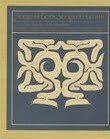
My favorite single photo of the ikupasuy carvings is the one on the cover of the book Ainu, Spirit of a Northern People published by the Smithsonian Institute, but there are some more awesome ones pictured inside the book. Find a copy if you can. (ref: Ainu, Spirit of a Northern People)